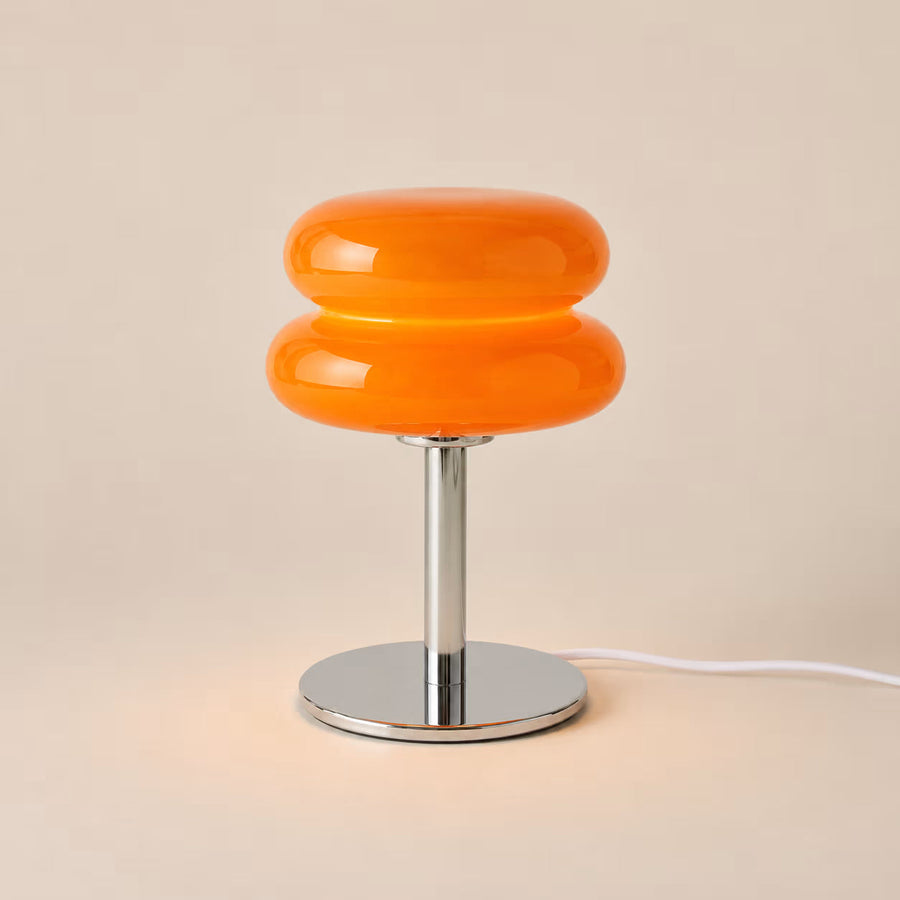

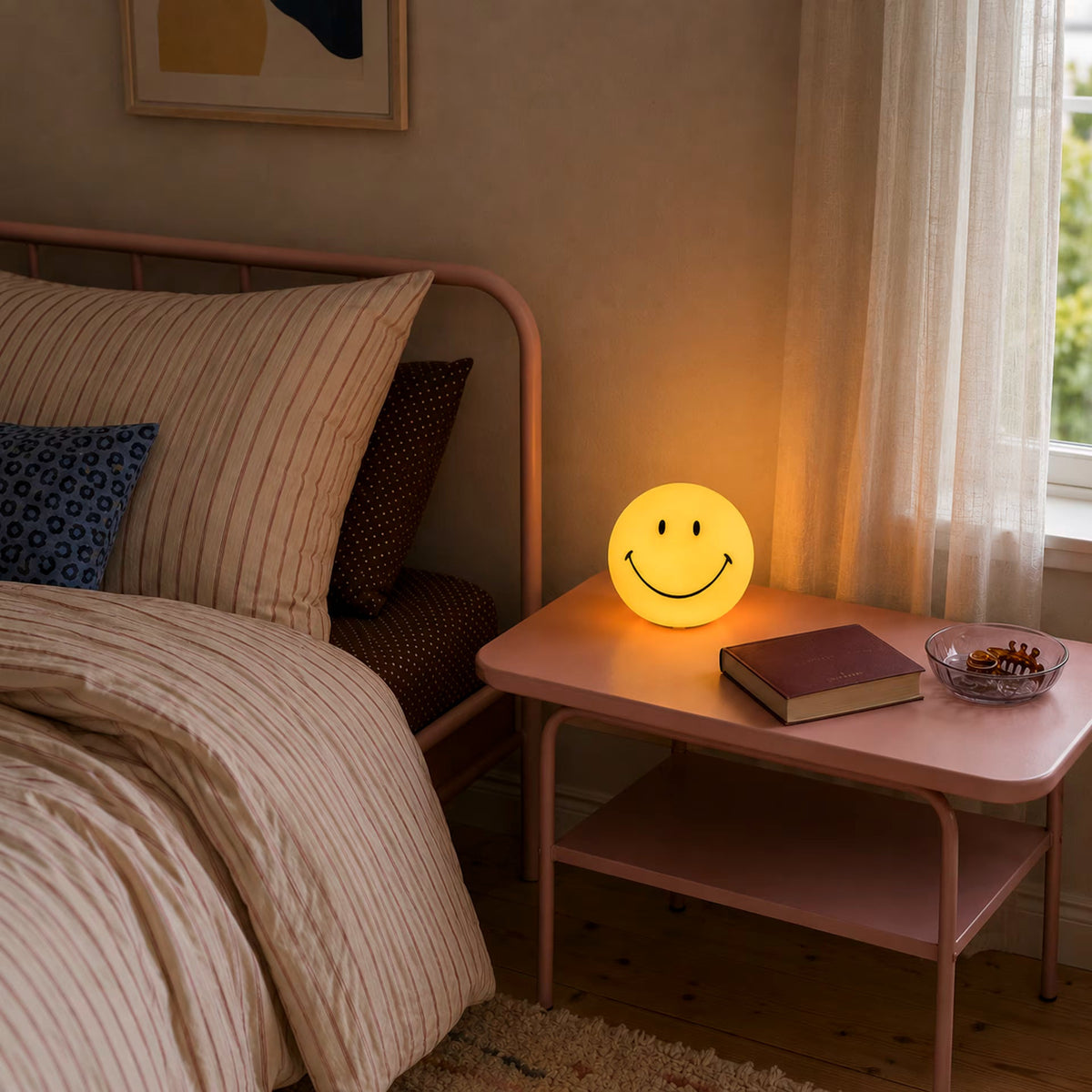
A rechargeable table lamp promises something wonderfully simple: good light, exactly where you want it, without designing the room around a socket.
The reality is a little less effortless. Battery-life figures are often measured at the lowest brightness, charging can take most of an afternoon, and a lamp that creates a beautiful pool of light may not be bright enough for reading.
The right question is not simply “How long does it last?” It is whether the lamp, charger and light output fit the way you will actually use it.
Five things to check before you buy
Rechargeable lamps are sold with a crowded list of numbers: milliamp-hours, watts, lumens, colour temperatures and runtime ranges. Only a few of them determine whether the lamp will feel convenient six months from now.
Look for runtime at the brightness you expect to use, not only the longest advertised figure.
USB-C is convenient, but check whether the cable and wall adapter are included and where the port sits.
Decide whether you need atmosphere, reading light or both. A beautiful glow is not automatically task lighting.
Touch dimming, memory and clear buttons matter more when you use the lamp every evening.
“Portable” does not mean weatherproof. Outdoor use requires a stated IP rating, not wishful thinking.

A cordless lamp should remove friction from the room, not replace one cable with a constant charging problem.
How much battery life do you actually need?
A lamp advertised with “up to 20 hours” may reach that figure only at low brightness. Turn the output up and the runtime falls because the LED draws more power. That does not make the claim useless; it means the range matters more than the maximum.
Think in evenings rather than abstract hours. If you use a lamp for three hours after dinner, an honest eight-hour runtime covers two evenings with room to spare. If it sits on a restaurant-style dining table for long periods, or travels around the home all day, a larger battery becomes more important.
| Your routine | A practical target | What to watch |
|---|---|---|
| Short evening glow | 4 to 8 hours | Enough for a bedside or occasional side-table lamp if charging is easy. |
| Everyday room-to-room use | 8 to 12 hours | A useful middle ground for several evenings or a longer uninterrupted session. |
| Dining, hosting or long use | 12 to 20+ hours | Check whether the quoted figure applies only at the lowest brightness. |
How to read a rechargeable lamp specification
Product pages often present battery capacity, wattage, colour temperature and runtime as if they can be compared independently. They cannot. Each number describes one part of a system, and the most impressive number is not necessarily the one that makes the lamp better to use.
Milliamp-hours (mAh) indicate how much electrical charge the battery can store. A larger figure can support longer use, but only when voltage, LED efficiency and brightness are comparable.
Lumens (lm) describe total visible light output. They are useful for judging brightness, although shade shape and diffusion determine where that light actually lands.
Lower Kelvin (K) values feel warmer and calmer; higher values look cooler and clearer. Around 2700K–3000K generally suits relaxed evening lighting.
Watts (W) describe energy use, not perceived brightness. Efficient LEDs can produce useful light with relatively little power, which is valuable in a battery-operated lamp.
If a product page lists only battery capacity but gives no runtime range, you still do not know how often the lamp needs charging. If it promises a long runtime without explaining brightness, assume that the headline figure represents its lowest setting until the manufacturer confirms otherwise.
Look at the charger before the lamp
The least glamorous detail often determines whether a rechargeable lamp is pleasant to own. A lamp that lives beside a socket can tolerate a short cable and visible charging port. One placed on a shelf, dining table or windowsill needs a charging routine that does not become a weekly nuisance.
Widely used and reversible. Check the required power input and whether the lamp works while charging.
Easy to return after use and visually tidier, but a lost or damaged dock can be harder to replace.
Can create a clean lamp design, but confirm replacements are available before relying on it long term.
Also check what arrives in the box. “USB rechargeable” may mean a cable is included but the wall adapter is not. That is perfectly workable if you already own a compatible adapter, but it should not be a surprise.
An 8–12 hour lamp may need charging every three or four evenings.
Choose enough headroom to avoid running the battery flat during the evening.
Prioritise a common cable, accessible port and battery indicator.


Check the lamp from every angle. The profile reveals how much table space it needs; the illuminated view shows where the light actually lands.
A small control test
A long cycle through every mode becomes irritating at bedtime.
Memory is useful when you have already found the right evening brightness.
A hidden switch under the base looks clean but may be awkward in daily use.
Three levels are simple; stepless dimming gives finer control.
Battery care without turning it into a hobby
Rechargeable batteries are consumable components, so some capacity loss over time is normal. You do not need a complicated ritual to look after one. Keep the lamp away from sustained heat, use the recommended charger, and avoid leaving it completely empty for long periods. If it will be stored for months, give it a partial charge first.
Charging overnight is convenient, but follow the product instructions rather than assuming every lamp manages power in the same way. A status light or clear battery indicator is a small feature that prevents unnecessary charging and makes the lamp easier to trust.
Heat speeds battery ageing.
Match the stated charging requirement.
Recharge before long-term storage.
Runtime naturally reduces with age.
Choose the light for the job
Rechargeable table lamps are often compact and designed for ambience. That makes them excellent for creating a softer room, but it also means many are not intended to replace a desk lamp or ceiling light.
Soft diffusion, warm light and lower brightness suit shelves, dining tables and relaxed evening corners.
- Warm output
- Diffused shade
- Low dimming level
A focused or brighter beam is more useful for reading, desk work and detailed activities.
- Higher useful output
- Directional shade
- Brightness adjustment
Multiple colour temperatures and broad dimming make one lamp more adaptable throughout the day.
- Warm and neutral modes
- Wide dimming range
- Comfortable glare control
For bedrooms, warm and diffused light is usually easier to live with than a cool, exposed LED. Our bedroom ambient-lighting guide explains colour temperature, placement and glare in more detail.
Size, weight and materials matter more when a lamp moves
A wired lamp can sit in one position for years. A rechargeable one is handled, lifted and carried repeatedly, so its physical design has a bigger effect on everyday use. A very light lamp is easy to move but can feel unstable on a busy dining table. A heavy metal base feels reassuring, although you may not enjoy carrying it between floors every evening.
Best for bedside use, shelves and moving between rooms. Check that the base is broad enough to resist knocks, and look for a low centre of gravity.
Suited to dining and side tables where a more permanent, premium object is wanted. Look for a base that protects the table.
Silicone and frosted shades soften glare, making them useful beside a bed or in a child-friendly setting. Look for easy-clean surfaces.
Measure the footprint, not only the height. Product photography can make a small lamp look substantial or make a wide base disappear. On a bedside table, leave room for a phone and water. On a dining table, keep the lamp below the natural sightline so it does not become a barrier between people.
Shelves, narrow bedside tables and small pools of light.
Enough visual presence without taking over most surfaces.
Check proportions carefully and allow more visual breathing room.
Where rechargeable lamps earn their keep
Creates a pool of light without trailing a cable through the room. Choose low glare so people can see one another comfortably.
Useful when sockets are badly placed. Reachable controls and a low setting matter more than maximum brightness.
Ideal for spaces where routing a cable would spoil the effect. Check that the charging port remains accessible.
Works when the lamp provides enough directional light. Many decorative rechargeable lamps are too soft for sustained tasks.
Adds light without drilling, rewiring or committing furniture to the nearest outlet.
Only when the manufacturer states a suitable outdoor rating. Dry-weather portability is not the same as water resistance.


Soft bedside glow, a small movable accent or a more substantial table object: the right scale depends on what the lamp needs to do and where it needs to live.
Four rechargeable lamps, four different jobs
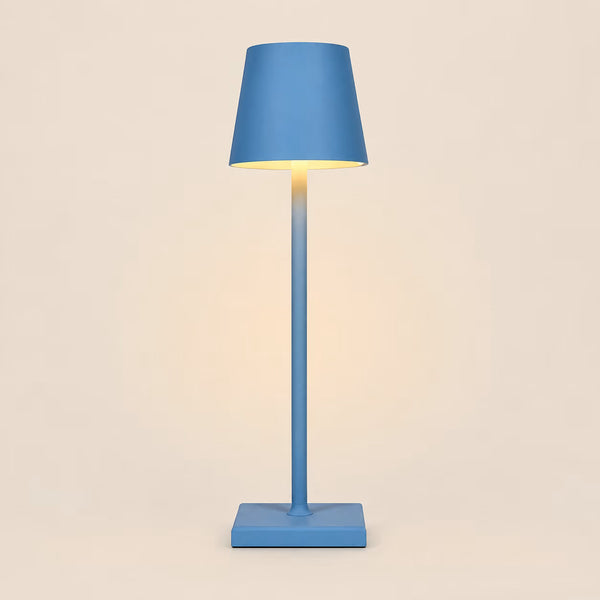
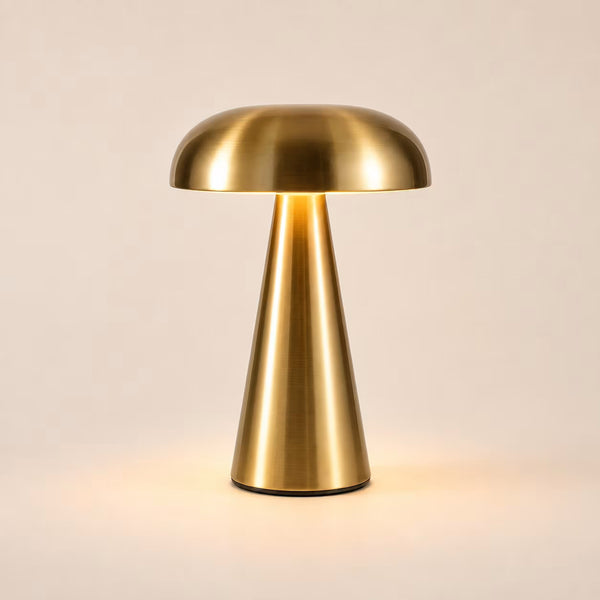
SickHaus currently has four lighting designs with verified rechargeable specifications. Rather than presenting them as interchangeable, it is more useful to choose according to the role each one performs best.
Simplistic Wireless LED Lamp
Sleek Abstract Lamp
Mini Ambient Desk Light
Smiling Night Lamp
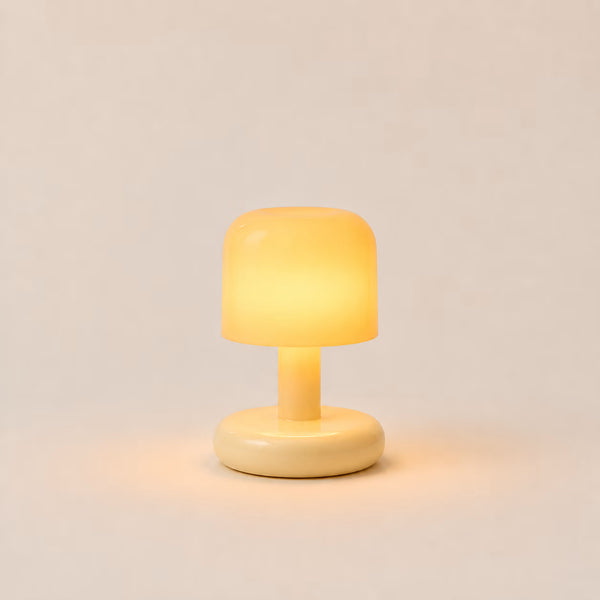

What these four lamps tell us
There is no single “best” rechargeable table lamp because the use cases pull in different directions. A larger battery supports longer sessions but can add weight. A tiny lamp is easy to position but creates a smaller pool of light. A plated metal design feels more like permanent furniture, while a soft night light is designed to be touched and used close to the bed.
Start with the job, remove anything that cannot meet it, and choose by appearance only after the practical shortlist exists. That is the easiest way to avoid buying a beautiful object that spends most of its life uncharged.
Six mistakes that make cordless lighting annoying
Choose around your normal brightness. The longest figure may describe the dimmest mode.
Without a stated IP rating, keep the lamp dry and bring it indoors.
Most compact models add a local pool of light; they do not replace the main ceiling fixture.
A beautiful shelf position soon becomes frustrating if the entire display must be dismantled to recharge it.
Many lamps include a USB cable but no plug. Confirm what is supplied before delivery day.
A good-looking lamp still needs an intuitive switch, useful dimming and comfortable light.
The before-you-buy checklist
Use this as the final product-page scan. A rechargeable lamp does not need every feature, but its limits should be clear before you order.
- Runtime range is stated. Not only a maximum without context
- Charging time is acceptable. And the charging port is easy to reach
- Cable and adapter are understood. You know exactly what is included
- Brightness suits the job. Ambient, task or a genuine mix of both
- Controls make sense. On/off, dimming and colour modes are simple
- Dimensions fit the surface. Including room to use the table around it
- Indoor or outdoor use is explicit. No assumed water resistance
- The lamp still works aesthetically. It earns its place even while switched off
Rechargeable table lamp questions
How long do rechargeable table lamps last?
Runtime varies by battery, LED output and brightness. Compact lamps may provide several hours, while larger batteries can reach 12–20 hours or more at lower brightness. Compare the full runtime range rather than the maximum alone.
Can rechargeable lamps be used while charging?
Some can, but not all. Check the manufacturer’s instructions. If pass-through use matters, confirm it before buying rather than assuming every USB-powered lamp supports it.
Are cordless and rechargeable lamps the same?
Not always. “Cordless” only means the lamp can operate without a mains cable. Some cordless lamps use replaceable batteries; rechargeable lamps contain or accept a battery that can be charged again.
Are rechargeable table lamps bright enough for reading?
Some are, but many are designed mainly for ambience. Look for a useful lumen figure, directional light and adjustable brightness. A soft decorative glow may be comfortable beside a bed without being adequate for sustained reading.
Can I use a rechargeable table lamp outdoors?
Only if it has a stated outdoor or suitable IP rating. A lamp described as portable or cordless is not automatically protected against rain, condensation or splashes.
Is USB-C better for a rechargeable lamp?
USB-C is convenient because cables are widely available and the connector is reversible. It does not guarantee faster charging; that depends on the lamp’s supported input and charger.
Do rechargeable lamps lose battery capacity over time?
Rechargeable batteries gradually hold less energy as they age and complete charge cycles. Avoiding unnecessary heat and following the supplied charging instructions can help preserve performance.
What colour temperature is best?
Warm light is generally comfortable for bedrooms, dining tables and evening ambience. Neutral light can be more practical for reading or desk work. A lamp with several colour temperatures gives you more flexibility.
 Die simple drahtlose LED -Lampe£25.00
 Schlanke abstrakte Lampe£28.00
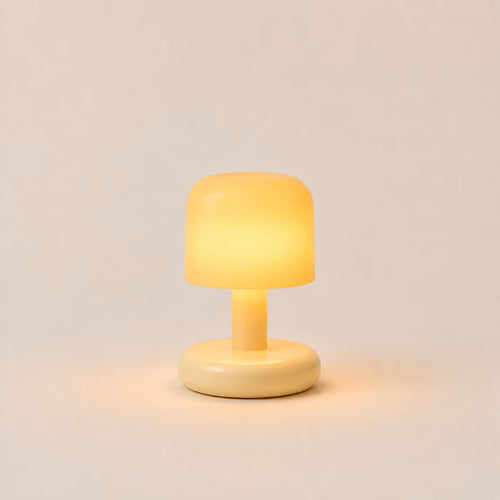 Das Mini Umgebungsschreibtisch Licht£15.00
 Die lächelnde Nachtlampe